
Skip to content

Long-Term Care at the
Highest Skill Level accent-12

There's joy to be had at any stage of life. Receive support in a clinically superior, safe, and enriching setting.
Caregiver talking to senior people and helping them while they eating at table accent-11

Why choose
long-term care?

Requiring a higher level of care doesn't mean relinquishing joy. Long-term care at WesleyLife provides vibrant environments, attentive medical professionals, skilled caregivers, and opportunities to pursue joy.

Patient having his hand massaged with a spiky massage ball accent-10

Here, your loved one will find personalized support.

When someone you love requires comprehensive care, WesleyLife offers a range of solutions across its network of communities and services. Loved ones are encouraged to be involved every step of the way!
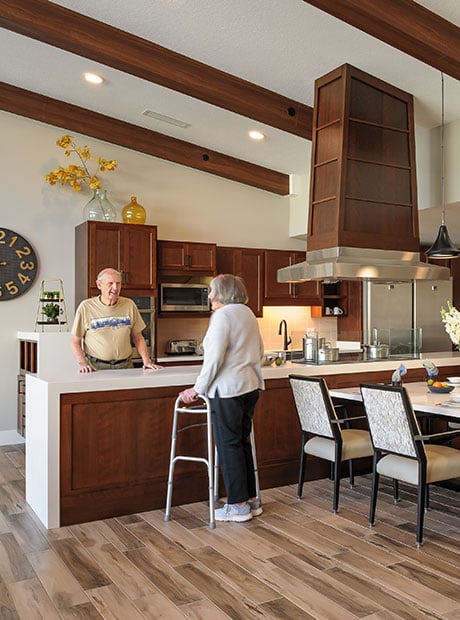
Senior friends hanging out in the community kitchen accent-12

Find a place your loved one can call home.

At WesleyLife, we honor residents at every level of independence with dignity and respect. We'll create a personalized treatment plan that places the needs of your loved one first and creates ongoing opportunities for engagement, support, and meaningful connection. 

Build a Life, designed for your loved one.

Turn to WesleyLife for long-term care you can trust, with services specifically tailored to meet your loved one's needs.

Find a Community
icon of a hand holding a heart with a heartbeat line

Clinical Excellence in Action

Long-term care at WesleyLife is defined by top-of-the-line, comprehensive support in a comfortable, well-equipped, homelike setting. Our teams are committed to meeting your loved one's needs with holistic, comprehensive services.

icon of a caregiver and a senior man

Skilled, Empathetic Caregivers

There’s a reason WesleyLife is consistently named a Great Place to Work®. We attract committed, empathetic professionals who build meaningful relationships with long-term care residents and their families.

icon of a house

Private and Semi-Private Suites

Accommodations in our long-term care communities include both private and semi-private suites. Each suite includes individually controlled heating and air conditioning, and we encourage your loved one to personalize their room with special touches from home.

icon of a crockery

Culinary Delights

Three delicious and nutritious meals are prepared and served daily in long-term care. Eating well is part of what we call our Core4 principles of the Well at Wesley program. Our dining teams are committed to providing quality, healthy foods that will help keep your loved one satisfied and strong.

icon of hands holding a heart

Person-Centered Care

We provide regular wellness assessments and personalized plans for each resident in long-term care. We focus on your loved one's mind, body, and spirit, providing programming, experiences, and interactions that promote engagement beyond physical health.

icon of a grandfather and a kid

Focus on Family

Involvement from loved ones is key to enhancing positivity and engagement. Our programming is inclusive for families and other loved ones, and we welcome and encourage your presence!

Find a Community

Explore our latest blog posts.

Explore our latest posts to learn more about care options, considerations, and support.
Visit Our Blog
Senior lady nods her head listening to caregiver recommendations

Long-Term Care vs. Skilled Nursing

Learn about the overlap and differences between long-term care and skilled nursing care, including primary goals, costs, scope, and more.

Read More

Senior couple using a laptop at home, having breakfast and discussing finances

Are There Alternatives to Long-Term Care Insurance?

Explore practical alternatives to long-term care insurance, from using your assets to enrolling in WesleyLife’s WellAhead program.

Read More

An older man and his granddaughter smiling while looking at a family photo album.

The 3 Stages of Caregiver Burnout & Tips to Manage Stress

Caregiver burnout is not inevitable. Learn the signs, the risk factors, and how to manage caregiver stress.

Read More

happy senior couple riding bicycles at summer park
accent-12
happy senior couple enjoying quality time at the park

Join our mission.

Your donation can make a real difference to the thousands of people we serve. Please consider making a contribution to the WesleyLife Foundation.

Donate Now
accent-12

Check out our FAQs

Explore answers to your most common questions about long-term care.

Long-term care provides around-the-clock support for people who need help with activities of daily living, such as bathing and dressing, and those who need ongoing skilled nursing care. This form of care is delivered in a long-term care community, where residents enjoy safe and homelike apartments with access to help whenever it’s needed.

Long-term care offers more extensive support and supervision than assisted living. The right fit for a person depends on the amount of assistance they require with activities of daily living or with health needs. These two levels of living may exist alongside each other in a community that offers a continuum of care, offering a seamless transition for residents whose need for assistance increases with time.

While “nursing home” is a common term for a long-term care community, this term typically brings to mind a traditional, clinical environment focused strictly on medical supervision. A long-term care community blends professional nursing with personal care and social programs designed to enhance a resident's overall quality of life in a homelike setting.

All WesleyLife communities provide access to key on-site amenities, including:

  • Home and lawn maintenance
  • Gathering spaces
  • Dining venues
  • Wellness centers

Some additional amenities you may find include:

  • Aquatic centers
  • Yoga studios
  • Recreation and game rooms
  • Libraries
  • Guest suites for friends and family
  • Art studios
  • Woodworking shops
  • Salons and barbershops
  • Outdoor patios and gardens
  • Walking paths
  • Cafés and coffee shops
  • On-site banking
  • General stores

The cost of long-term care depends on the community and the level of care provided. As of 2025, the monthly average for long-term care in Iowa was $10,038 for a private room and $9,277 for a semi-private room. In terms of daily rates, WesleyLife long-term care communities start as low as $341 per day. Keep in mind that the cost of long-term care is comprehensive, replacing many living expenses, including housing costs and meals.

While Medicare offers some coverage for short-term, rehabilitative stays (typically up to 100 days), it doesn’t cover costs associated with a permanent placement in a long-term care community. Depending on their state’s income and asset requirements, some individuals may qualify for assistance with long-term care costs through Medicaid.

Long-term care insurance (LTCI) is a specialized form of coverage designed to help pay for costs that Medicare and traditional health insurance don’t cover. Policyholders pay regular premiums, and if they eventually require support, such as in-home care or a move to an assisted living or long-term care community, they file a claim to receive reimbursement up to the policy’s daily limits. Policies come with terms and conditions that specify certain benefit triggers (e.g., the inability to perform basic tasks, such as bathing or dressing) and waiting periods before coverage begins.

Even with careful financial planning, many families remain anxious about the uncertainties of the future, particularly rising health care costs. We alleviate these concerns through the WesleyLife Promise: our assurance that if a resident outlives their financial resources through no fault of their own, they won’t be asked to leave their home with us. They’ll continue to receive the same high-quality care.

For individuals who require ongoing assistance with activities of daily living and health needs, long-term care can offer the ideal level of support within a safe and homelike setting. Here are some primary indicators that a person may benefit from a transition to long-term care:

  • Increasing medical needs, necessitating 24/7 access to skilled nursing care
  • Frequent falls or mobility issues that call for help getting around
  • Difficulty with activities of daily living, such as bathing, dressing, and personal hygiene
  • Challenges managing prescriptions and medication dosages
  • Burnout among family caregivers who are struggling to meet their loved one’s needs

Ultimately, if the current support system is falling short of meeting a person’s needs, it may be time to explore long-term care.

Didn't Find an Answer? We Can Help!