

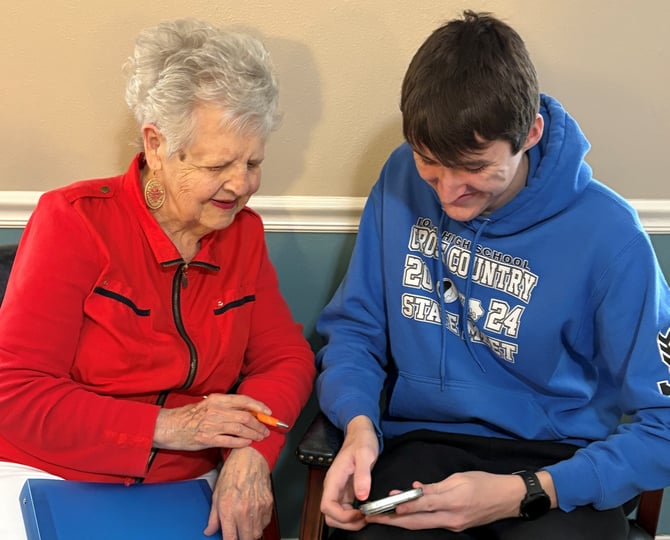
At Halcyon House, a practical challenge kept surfacing.
Residents needed help with technology — not just occasionally, but regularly. Questions came through wellness, housekeeping, nursing, even dietary around phones, laptops, smart TVs, and more. Small issues multiplied, and residents didn't have a central source from whom to seek help.
In fall 2024, the community tried something different.
“We partnered with Washington High School and created a paid student position,” Becky Carter, director of wellness for Halcyon House, says. “We were looking for students who had the knowledge, but just as important, the patience to help.”
The setup is simple: One student is onsite four days a week for about 90 minutes a day, offering one-on-one technical support. Residents schedule time with him through the front office and choose what works best: meeting in a dedicated tech space on campus or having the student come to their apartment.
A student named Charlie was the first to serve in the role. He had a strong interest in technology as well as a personal connection: His grandmother had lived at Halcyon House. He worked from 2024 until 2025 before leaving for college nearby. Beginning in September 2025, student Sawyer stepped into the role and continues the work.
Skills worth paying for
Becky says leaders at Halcyon House decided to make the internship a paid one for a couple of reasons: The skills the students bring to the table are extremely valuablee to the community, and leaders wanted the students to feel as committed as possible to the role.
"We wanted them to know how valuable they are," she says. “We knew other communities were doing this with volunteers, but we felt paying the students would create more ownership. It also gives them real, hands-on experience.”
The ability of the students to earn residents' trust also was a concern. Both young men passed that test with flying colors, one resident says.
“With both Charlie and Sawyer, there’s a feeling of familiarity,” Tish, who lives in independent living, says. “I know them, and we can pick up right where we left off. They’re patient; they'll explain something a different way and do whatever they can to help you understand what they've done. They seem to care about us."
"My phone is how I stay connected"
The regard goes both ways, Tish says.
"We’re interested in their lives, too,” she says. "And while they're helping us, we're helping them, I think. It's good for them to be working with people of all ages.”
That connection shows up in small, everyday ways.
“They know how much I use my phone and they make sure it works the way I need it to," Tish says. "That may not seem like a big deal, but my phone is how I stay connected with my children.
"I could not live without that phone — and having someone here who’s patient and willing to help keep it working makes all the difference.”